
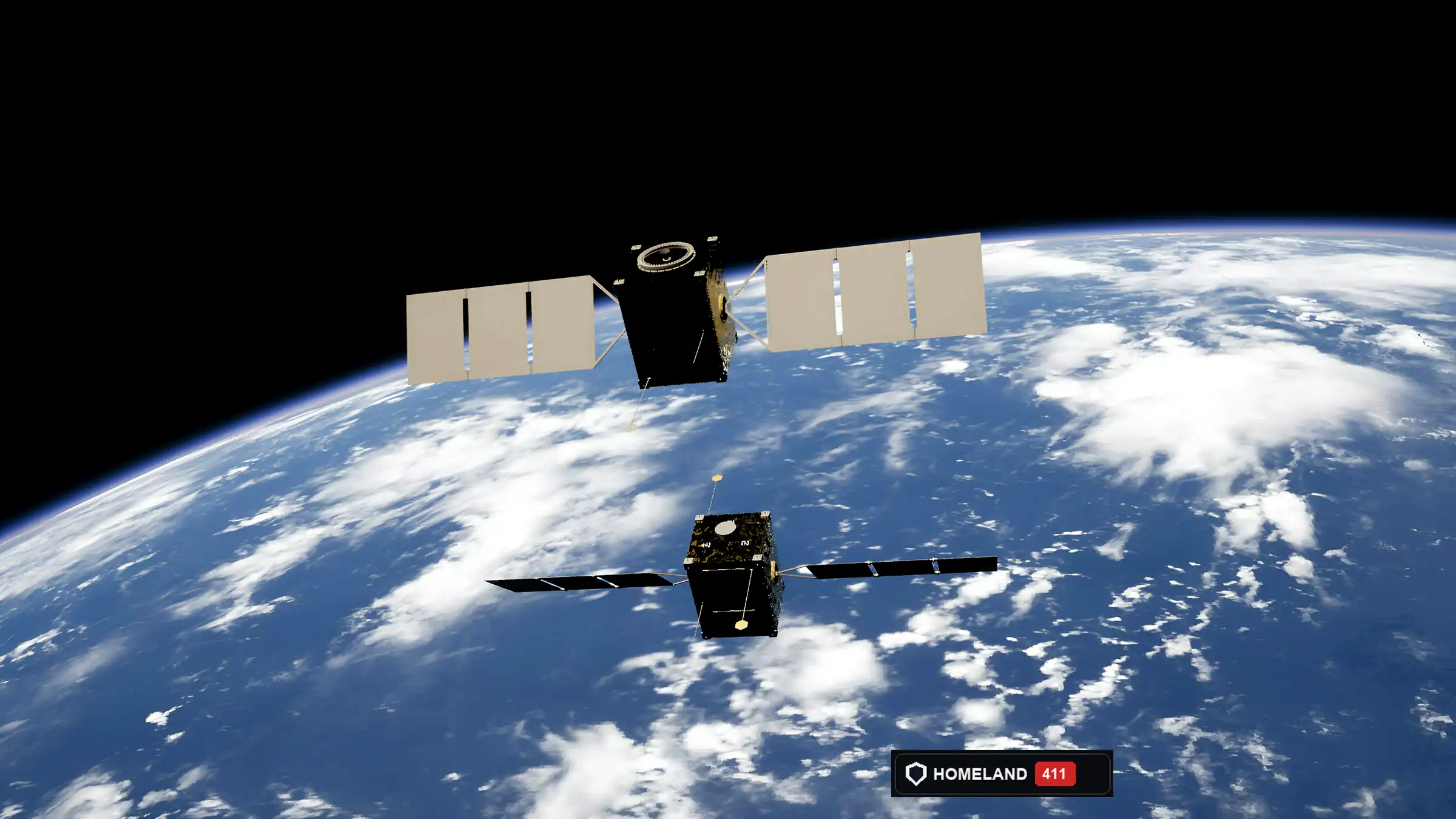
The apparent satellite launch out of China’s Xichang Satellite Launch Center on Thursday evening was tracked by Taiwan’s armed forces as its flight path crossed the southwestern part of the island’s air defense identification zone (ADIZ) on the way to the Western Pacific, according to Ministry of National Defense recent notification.
The launch was timed by the ministry at “7:50 p.m. (UTC+8),” and the rocket was said to have been flying at an altitude “beyond the atmosphere, posing no threat,” while the island’s forces “monitored the process and remain ready to respond,” according to that same post, which went up about a minute later.
The China satellite launch at issue had been flagged in advance by the ministry on Tuesday, when it said a satellite was expected to be sent up from Xichang in Sichuan Province on Thursday and to fly over Taiwan’s ADIZ toward the western Pacific, citing data from the US Federal Aviation Administration, according to the Taipei Times.
Yaogan-49 satellite group put in orbit from Xichang, Xinhua says
The launch reported out of Xichang on Thursday by Chinese state media was that of a Long March-2D carrier rocket carrying the Yaogan-49 01 satellite group, which was said to have lifted off at 5:38 p.m. Beijing time and “entered the preset orbits,” according to Xinhua.
The satellites were described by the state news agency as being meant mainly for “scientific experiments, land and resource surveys, crop yield estimation, and disaster prevention and mitigation,” and the mission was said to have been the 681st flight of the Long March series, according to that same Xinhua report.
The two accounts did not line up on the time, as the launch was put at 7:50 p.m. by Taiwan’s ministry, which did not name the rocket or the satellites, and at 5:38 p.m. by Xinhua, even though Beijing and Taipei keep the same UTC+8 clock, according to a comparison of the two by Homeland411.
The details of Thursday’s launch that were given by each side are set out in the table below, drawn from the ministry’s post on X and its notice on Tuesday and from the Xinhua report, according to a review of those three sources by Homeland411.
| Detail | Taiwan’s Ministry of National Defense | Xinhua |
|---|---|---|
| Launch site | Xichang Satellite Launch Center, flagged in advance on Tuesday | Xichang Satellite Launch Center in Sichuan |
| Launch time (UTC+8) | 7:50 p.m. | 5:38 p.m. |
| Rocket | Not named | Long March-2D |
| Payload | Satellites, not named | Yaogan-49 01 satellite group |
| Flight path | Over the southwestern ADIZ toward the Western Pacific | Not described |
| Stated use | Not given | Scientific experiments, land and resource surveys, crop yield estimation, disaster prevention |
| Assessment | Beyond the atmosphere, posing no threat | Entered the preset orbits |
The Yaogan mission was the only launch from Xichang listed for the day by the Launch Library spaceflight database, which described its payload as “Chinese reconnaissance satellites of unknown functions,” according to the database’s entry for Thursday’s flight.
A familiar flight path, days before Taiwan’s local elections
The wording of Thursday’s post closely matched a statement the ministry issued in August of last year, when a satellite sent up from Xichang at 4:55 p.m. was likewise said to have crossed the southwestern ADIZ toward the Western Pacific at an altitude “beyond the atmosphere, posing no threat,” according to the Taipei Times.
The defense ministry’s daily tally released Thursday morning had counted two Chinese military aircraft, one of which entered the southwestern ADIZ, along with six Chinese naval vessels around Taiwan in the 24 hours to 6 a.m., according to the ministry’s website.
The launch came two days before Saturday’s local elections, which include the Taipei mayoral race between incumbent Chiang Wan-an of the Chinese Nationalist Party (KMT) and Democratic Progressive Party legislator Puma Shen, according to the Taipei Times.
The handling of such launches has been a sensitive matter on the island since January 2024, when a satellite sent up from Xichang days before the presidential election set off mobile emergency alerts warning residents that a “missile” had flown overhead, before the authorities clarified that it was a satellite, according to NPR.