
Threat actors operating the Qilin ransomware syndicate have breached the University of Texas at Arlington (UTA), compromising campus web servers and exfiltrating confidential administrative records. Independent threat intelligence researcher Dominic Alvieri disclosed the intrusion on November 12, publishing forensic proof-of-compromise samples on underground telemetry feeds. The cyberattack targeted servers running MachForms, a PHP form builder deployed across university departments and research offices. The incident compromises critical student-facing administrative portals across the institution’s primary campus.
University leadership has contained lateral server access across connected campus networks. Campus administrators have not yet issued formal public disclosures confirming the extent of compromised personal records. Threat intelligence specialists confirmed that proof-of-breach files began circulating across dark web channels on Wednesday morning.
Never Miss An UpdateFollow us on Google News to get our latest security, defense and cyber reporting in your feed. It’s free and takes one tap.
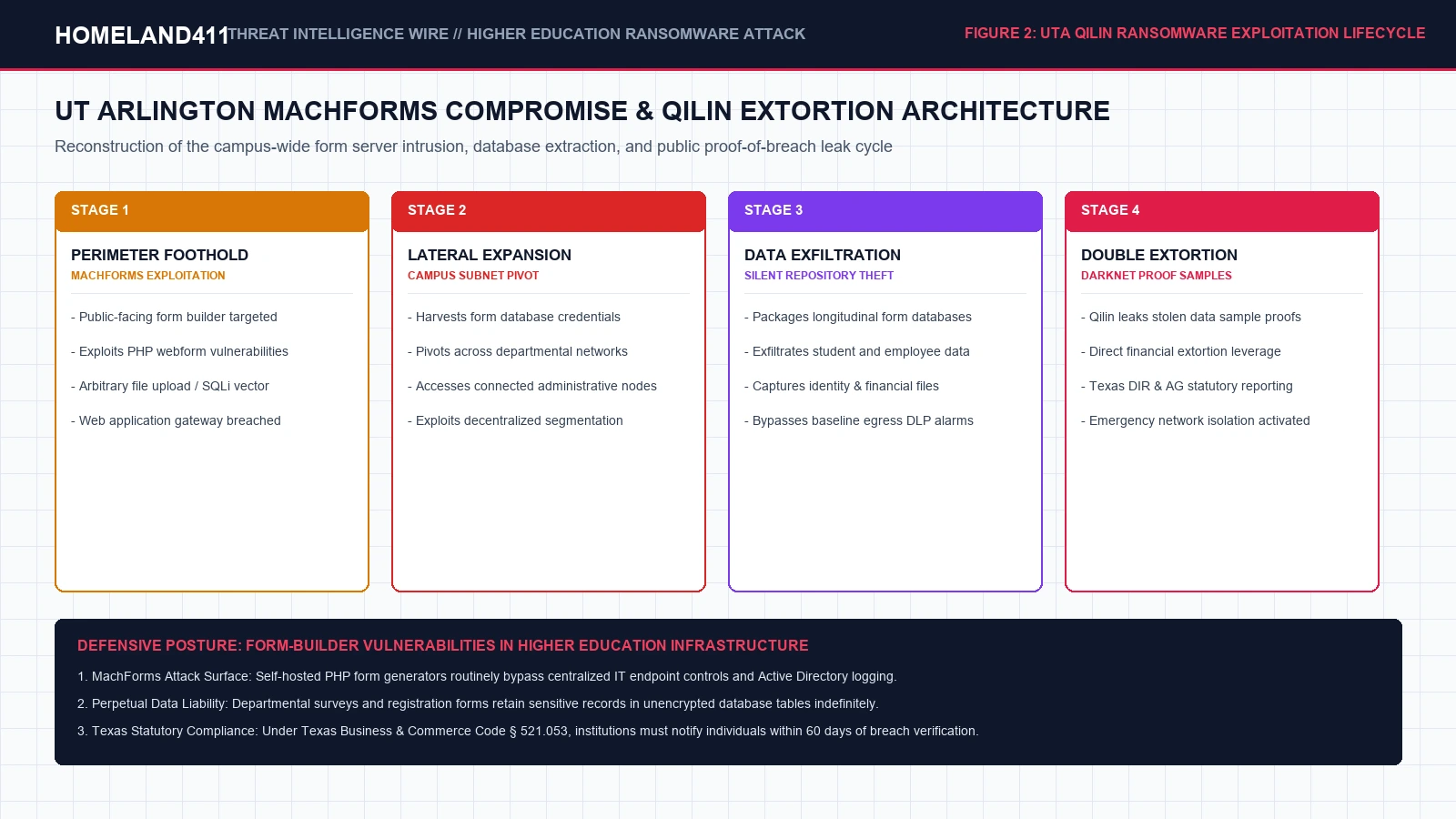
Follow on Google NewsSecurity analysts classify Qilin as one of the most aggressive ransomware groups currently active. The syndicate operates a double-extortion business model. Rather than relying solely on file encryption, the group steals high-value database tables during extended network dwell times. Attackers bypassed perimeter defenses by weaponizing administrative web applications. This technique allowed the gang to extract sensitive databases before automated monitoring tools triggered egress alarms.
Campus Webform Architecture and the MachForms Exploitation Vector
The primary intrusion vector targeted campus deployments of MachForms. The application is a self-hosted PHP and MySQL platform used to build online web forms. Departmental staff at UTA deployed the software to process housing applications, travel reimbursements, scholarship reviews, and disability requests. These web portals connect directly to underlying database clusters housing longitudinal student records.
Forensic analysis indicates that the attackers breached the web host before attempting lateral movement across connected campus subnets. Adversaries frequently exploit unpatched PHP file upload flaws and SQL injection vulnerabilities to establish initial web shells. Once inside the application directory, the attackers extracted plaintext database credentials from local configuration files. This gave the syndicate direct access to archived student submissions.
| Compromised Vector / Layer | Targeted University Interface | Adversary Tactic & Mechanism | Incident Impact & Exposure |
|---|---|---|---|
| Perimeter Application Gateway | Campus-Wide MachForms Host | Exploitation of webform application vulnerability | Initial remote web shell access |
| Administrative Data Tier | MySQL Form Repositories | Credential harvesting from local configuration files | Longitudinal student and staff data exfiltration |
| Threat Syndicate Attribution | Qilin (Agenda) Ransomware RaaS | Rust-based double extortion and darknet proof leaks | Confidential files published to underground forums |
| Statutory Oversight Body | Texas DIR & Texas AG Office | Mandatory reporting under Texas Bus. & Com. Code § 521.053 | Formal state breach registry notifications |
This incident reflects broader security challenges facing decentralized higher education networks. When individual academic departments host standalone web tools without central IT oversight, forgotten form databases accumulate sensitive personal records indefinitely. This dynamic directly mirrors vulnerabilities exposed in the recent York University breach, where unmonitored departmental webforms exposed student records over a multi-year window.
Qilin Ransomware Syndicate: Anatomy of a Double-Extortion Campaign
Qilin emerged in early 2022 under the name Agenda. The syndicate writes its malware payloads in Rust and Golang. Their code features aggressive process-killing routines that terminate security agents, database services, and volume shadow copies. The gang gained international attention after launching a disruptive attack on London healthcare provider Synnovis, which crippled pathology services across National Health Service hospitals.
When attacking educational institutions, Qilin relies on aggressive extortion tactics. The syndicate exfiltrates personally identifiable information, financial records, and operational documents over several days. If the targeted institution refuses to negotiate a ransom payment, the gang publishes stolen data tranches on their Tor leak blog. This public exposure creates immediate legal and reputational pressure.
By publishing sample data from UT Arlington, the gang aims to accelerate negotiations before regulatory agencies intervene. Security investigators analyze published samples against platforms like Have I Been Pwned to track credential leakage. Compromised academic records frequently appear in automated credential-stuffing campaigns targeting enterprise portals.
Regulatory Compliance and Incident Mitigation Directives
UT Arlington is a public institution within the University of Texas System. Consequently, the university must adhere to strict state reporting mandates. Texas Business and Commerce Code § 521.053 requires institutions to disclose security breaches to affected individuals without unreasonable delay. The university must also submit formal filings to the Office of the Texas Attorney General and the Texas Department of Information Resources.
To contain active threats and prevent further exfiltration, campus security teams and systems administrators should enforce the following defensive directives:
- Isolate MachForms Application Servers: Sever external internet access to campus form generators and restrict database administration to internal management subnets.
- Revoke Enterprise Database Credentials: Rotate all application secrets, database passwords, and service account tokens connected to webform repositories.
- Inspect Network Egress Telemetry: Audit firewall session logs and NetFlow records for abnormal outbound data streams moving toward known Qilin infrastructure.
- Deploy Behavioral Endpoint Rules: Configure Endpoint Detection and Response rules to block unauthorized PowerShell commands and terminate suspicious Rust executables.
Specialists from the UTA Information Security Office are conducting forensic investigations alongside regional authorities. Homeland411 will provide additional updates as formal incident reports emerge.