WASHINGTON — The Cybersecurity and Infrastructure Security Agency and the Federal Bureau of Investigation issued an urgent joint advisory. The alert warns critical infrastructure operators of coordinated cyberattacks targeting industrial refrigeration systems. Malicious actors are exploiting internet-exposed temperature controllers across commercial food supply chains, regional healthcare facilities, and military logistics hubs. Federal officials confirmed intrusions involving remote temperature tampering that forced cooling units into continuous heating and defrost cycles. The alert was issued with the Department of Health and Human Services and the Department of Agriculture. Unmitigated compromises threaten severe physical asset destruction and massive inventory spoilage.
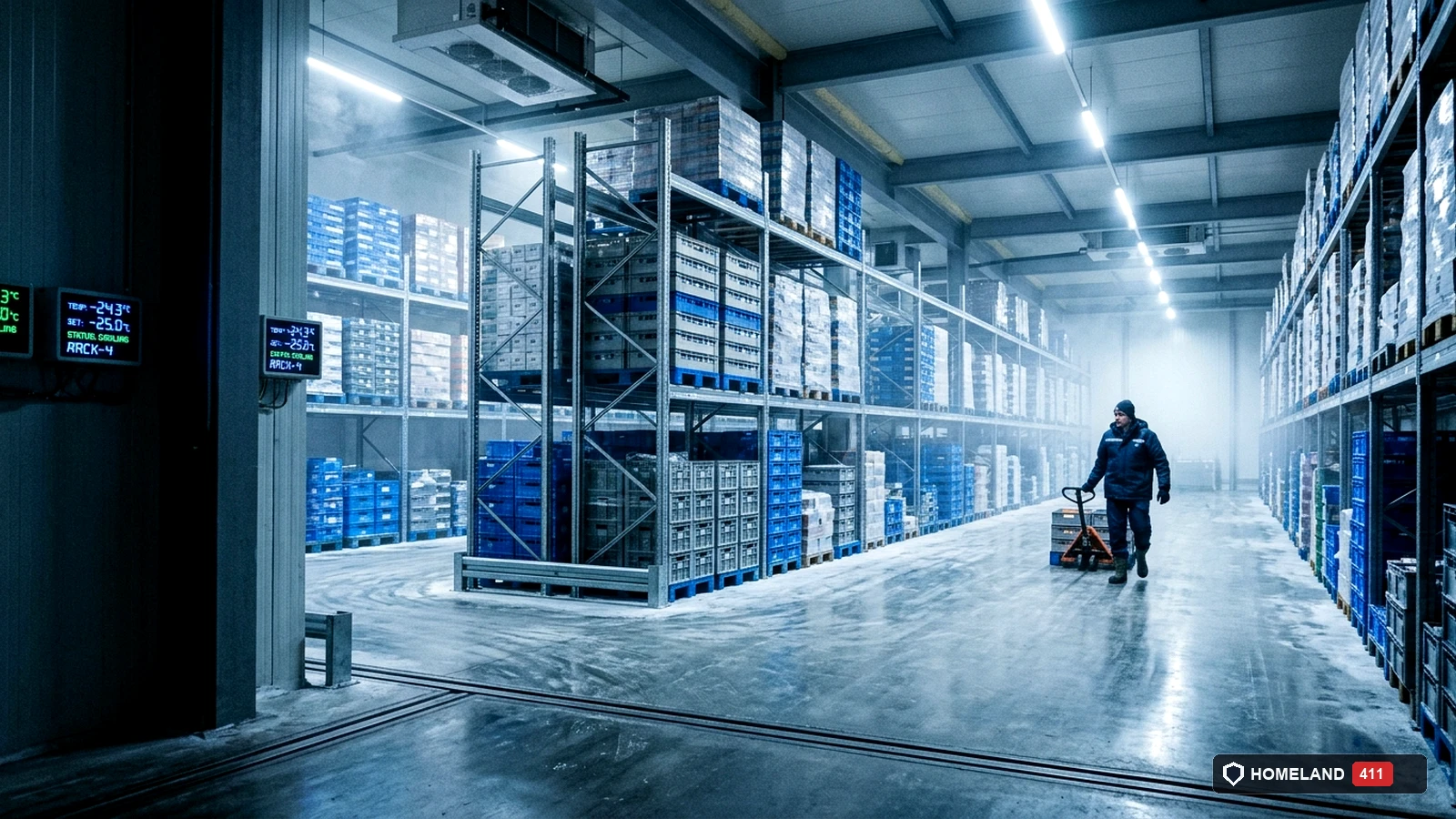
Forensic responders identified unauthorized intrusions spanning grocery retail chains across Europe and domestic military installations. Compromised sites also included regional blood banks preserving vital plasma reserves. Threat actors systematically scanned public IP ranges to locate unsecured supervisory controllers managing walk-in freezers and cold storage warehouses. Once connected, intruders altered operational setpoints without triggering immediate visual telemetry alarms on local monitoring consoles. This stealthy manipulation induced a persistent denial-of-view state while temperatures surged past safe preservation thresholds.
Never Miss An UpdateFollow us on Google News to get our latest security, defense and cyber reporting in your feed. It’s free and takes one tap.
Follow on Google NewsThe campaign exposes persistent operational technology vulnerabilities across civilian distribution pipelines. These risks mirror vulnerabilities documented in Homeland411’s field investigations into critical infrastructure operational technology and supply chain risks. Traditional enterprise ransomware operations focus strictly on file encryption and extortion. In contrast, these industrial disruptions inflict direct physical damage on mechanical compressors while destroying perishable inventories.
Investigators traced initial footholds to unauthenticated remote access consoles and legacy firmware builds maintaining factory default credentials. Plant managers frequently connect digital cooling controllers directly to commercial broadband routers. This setup enables remote contractor telemetry checks, but bypasses enterprise zero-trust security perimeters. Infiltrators take advantage of these exposed maintenance pathways to issue unauthorized supervisory override commands directly to programmable logic relays.
Industrial Controller Vulnerabilities and Physical Temperature Override Matrix
Industrial refrigeration platforms rely on supervisory control modules to synchronize variable-frequency compressors, evaporator fans, and electric defrost coils across complex facility layouts. Attackers focus exploitation on widely deployed commercial controller models that expose unprotected web consoles and Modbus management ports directly to the public internet.
| Target Controller Platform | Exposed Interface / Port | Vulnerability & Tracking ID | Injected Operational Override | Physical Facility Impact |
|---|---|---|---|---|
| Copeland Dixell XWEB 300D | HTTP / HTTPS (Port 80 / 443) | CVE-2026-25085 — Authentication Bypass | Forced continuous heating cycle set to +50°C | Total food spoilage and compressor valve fatigue (CISA Advisory →) |
| Danfoss AK-SM 800A Series | Web Management (Port 8080) | CVE-2025-41450 — Datetime Auth Flaw | Defrost schedule overwrite via administrative API | Ruptured pharmaceutical cold chain and plasma degradation |
| Legacy Modbus RTU / TCP Gateways | Industrial SCADA (Port 502) | Unauthenticated Function Code 0x10 | Rapid relay coil oscillation commands | Electrical contact arcing and high-pressure refrigerant venting |
| Cellular IoT Monitoring Modems | Telnet / SSH (Port 23 / 22) | Default Factory Administrative Passwords | Telemetry sensor spoofing and alarm suppression | Denial-of-view masking nocturnal thermal runaway events |
| Supermarket Central Rack Controllers | BACnet / IP (Port 47808) | Unsegmented Boundary Routing | Simultaneous multi-evaporator shutdown broadcast | Commercial grocery freezer shutdown and localized fire hazards |
Independent vulnerability telemetry analyzed by industrial security researchers at Claroty confirms that hundreds of commercial facilities expose unauthenticated supervisory interfaces. Equipment from major manufacturers, including Copeland facility controllers and Danfoss monitoring systems, can be identified through specialized internet asset search engines. Attackers leverage these public device listings to execute automated brute-force attacks against administrative login portals.
Attack Mechanics and Defrost Heating Cycle Manipulation
Incident telemetry collected from compromised facilities reveals attackers rely on automated script scanning rather than specialized custom zero-day exploits. Once inside administrative panels, threat actors weaponize built-in diagnostic and maintenance routines designed for refrigeration servicing. By abusing authorized engineering parameters, adversaries execute damaging physical operations while evading heuristic security monitors.
Adversaries systematically deploy four operational manipulation tactics against targeted cold storage facilities:
- Forced Defrost Cycle Initiation: Attackers override automated refrigeration cycles, locking electric heating elements into continuous defrost mode that elevates interior freezer temperatures above 122°F.
- Suppression of Local Audio and Visual Alarms: Intruders alter high-temperature alarm thresholds and notification email registries, blinding on-site facility personnel during nocturnal shifts.
- Firmware Configuration Storage Wiper: Malicious operators modify non-volatile memory registers to prevent emergency setpoint resets by local technicians, requiring physical replacement of core control boards.
- Simultaneous Multi-Site Register Spraying: Threat operators broadcast concurrent Modbus commands across distributed supermarket franchises, compounding regional supply distribution failures.
Thermal sensors in several targeted European supermarkets logged internal cabinet temperatures rising above 120 degrees Fahrenheit for six consecutive hours before on-site staff discovered the sabotage during morning shift handoffs. This heat exposure spoiled perishable inventories, degraded commercial cooling compressors, and created localized electrical smoke hazards. Similar cooling unit failures investigated at domestic military commissaries prompted defense officials to inspect base logistics infrastructure for unauthorized network access.
Multi-Agency Response Protocols and Purdue Model Network Isolation
The joint alert emphasizes that modern industrial refrigeration systems constitute vital operational technology nodes requiring strict defensive segmentation. Facility operators frequently view temperature monitors as passive appliances rather than computerized control systems carrying direct pathways to physical destruction. Federal cybersecurity coordinators urge immediate isolation of supervisory hardware behind hardened access controls.
Federal investigators urged facility engineers to audit boundary routing and eliminate public-facing management interfaces immediately. Security teams must enforce strict Purdue Model segmentation, severing direct paths between commercial corporate networks and Level 1 refrigeration controllers. These hardening measures reflect defensive architectures outlined in Homeland411’s analysis of credential harvesting and authentication perimeter defenses across distributed environments.
“Direct internet exposure of industrial cooling controllers transforms routine hardware into remote sabotage vectors. Environmental controllers require the same defensive rigor applied to electrical substations and water treatment plants.”
— Cybersecurity and Infrastructure Security Agency, Joint Operational Advisory
Technical guidance published by the FBI Cyber Division instructs operators to disable remote vendor support channels until multi-factor authentication and encrypted tunnel handshakes are fully verified. Security personnel should audit controller access logs for anomalous session lengths originating from external internet service provider subnets. In addition, facilities must inspect physical safety relief valves to ensure mechanical overrides operate independently of digital software controls.
Forward Compliance Deadlines and Mandatory Cold-Chain Verification
Federal authorities are establishing coordinated oversight timelines across commercial distribution hubs to prevent cascading food and medical supply disruptions. The Department of Agriculture and the Food and Drug Administration are deploying technical inspectors to evaluate operational technology hygiene across federally inspected meat packing facilities and cold storage warehouses. Sites failing to verify controller isolation face mandatory administrative compliance reviews.
In the healthcare sector, the Department of Health and Human Services issued a companion notice directing hospitals, organ procurement organizations, and regional blood banks to complete operational technology inventories by December 15, 2026. Facilities must certify that biological preservation chillers operate on dedicated subnets isolated from public web traffic. Defense logistics commanders have also expanded vulnerability sweeps across overseas commissary facilities ahead of upcoming joint readiness inspections.
With congressional critical infrastructure subcommittees scheduling oversight hearings for early next quarter, federal regulators are drafting binding operational baseline standards for commercial refrigeration manufacturers. Vendors that ship hardware with hardcoded credentials or insecure default remote management protocols will face increased regulatory liability and government procurement restrictions. Enterprise facility operators have until the end of the current quarter to complete forensic audits and replace legacy unsupported controllers across their operational networks, aligning with federal directives detailed in Homeland411’s ongoing coverage of federal enterprise cybersecurity compliance deadlines.