
 Tapping into his experience that ranges from the CIA and White House to the Brookings Institution, Bruce Riedel offers comprehensive insight into Saudi/U.S history in Kings and Presidents: Saudi Arabia and the United States since FDR.
Currently director of the Intelligence Project at Brookings, Riedel takes an up-close look at the often-complicated politics of U.S./Saudi relations over the past 70-plus years.
The “uneasy alliance” between the two countries, of course, stems from the fact that they are remarkably different, he writes. That, however, hasn’t stopped U.S. presidents since the 1940s from carving unique relationships with the kingdom in perhaps the most consistently volatile region of the world.
“America is a superpower democracy that aspires to be a tolerant home to a diverse multiethnic and multireligious population, all of whom are equal in the eyes of the law,” Riedel writes. “Saudi Arabia is the world’s last absolute monarchy and also is a theocracy with a fundamentalist religious faith, dominated by a Wahhabi clergy that is intolerant and suspicious of outsiders.”
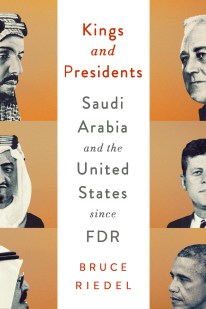
From there, Riedel takes a chronological walk through various administrations and their individual approaches to this ever-evolving relationship.
This includes Franklin Roosevelt’s relationship with the kingdom’s founder King Abdul Aziz al Saud (Ibn Saud), and President Kennedy, Johnson, and Nixon’s dealings with Crown Prince Faisal bin Abdul Aziz.
The chapter addressing the relationship between King Khalid bin Abdul Aziz and Jimmy Carter is particularly illustrative of the time, when Middle East volatility was at a now-too-common fever pitch. It was a period that included the Iranian Revolution, the Israeli-Egypt peace process, the Grand Mosque seizure in Mecca, and soon after, the Soviet Union invasion of Afghanistan.
Riedel also explores the Saudi/U.S. relationship in the wake of Iraq’s invasion of Kuwait, the 9/11 terror attacks, the Arab Spring, and the challenges that exist today as well.
Riedel notes “three fundamental issues” that often get in the way of kings and presidents.
“The three issues—the Israel-Palestine conflict; the role of Wahhabi Islam in Saudi Policy at home and abroad; and the pursuit of political reform in the Arab world—are likely to be disruptive factors in the relationship in the years ahead and will require creative diplomacy to manage,” Riedel writes.
Published by Brookings Institution Press, the book is available online.
© 2017 Homeland411