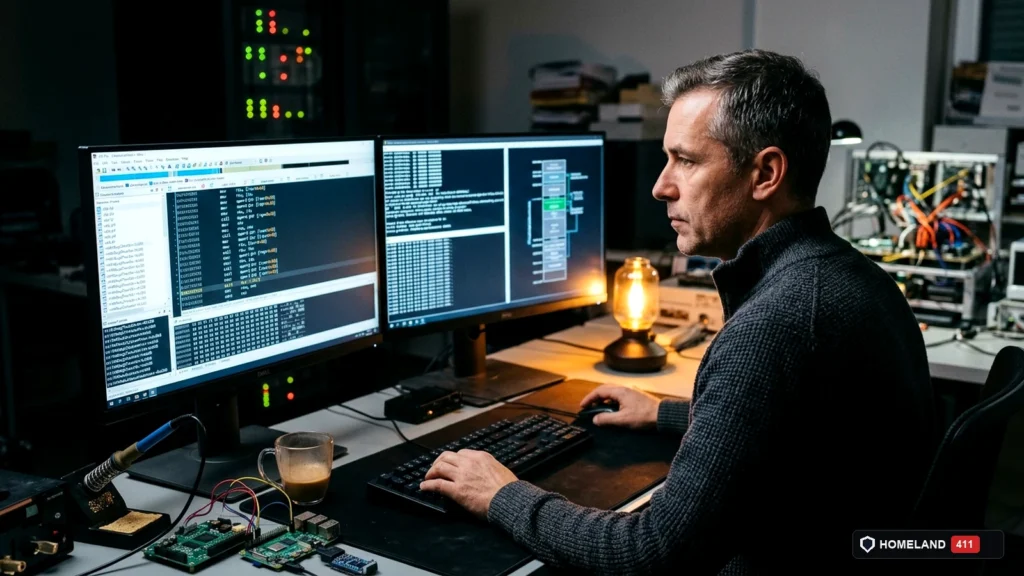
A threat actor on a Russian-language cybercrime forum is advertising a claimed remote code execution (RCE) exploit targeting the latest Telegram Desktop client. Threat tracker Daily Dark Web surfaced the listing on November 13 at 05:48 AM UTC. The seller claims the exploit achieves arbitrary code execution on victim workstations. Independent security researchers have not yet verified the code against live Telegram binaries.
The underground listing arrives days after researchers disclosed CVE-2026-107181. That high-severity flaw carries a CVSS score of 8.1 and enabled one-click local file exfiltration across desktop clients. Meanwhile, Russian-speaking exploit brokers have escalated multi-million-dollar bounties for zero-click messaging chains. Security teams must audit installed Telegram Desktop builds immediately and enforce local passcodes across managed endpoints.
Never Miss An UpdateFollow us on Google News to get our latest security, defense and cyber reporting in your feed. It’s free and takes one tap.
Follow on Google NewsTELEGRAM DESKTOP: SELLER CLAIMS RCE EXPLOIT FOR LATEST CLIENT — A threat actor on a Russian-language cybercrime forum is advertising a claimed remote code execution (RCE) exploit for the latest release of Telegram Desktop.
— Daily Dark Web (@DailyDarkWeb), November 13, 2026
Russian Forum RCE Listing and Underground Exploit Broker Context
Underground forum ads claiming zero-day RCE against mainstream messengers require strict forensic skepticism. Many listings bundle unverified proof-of-concept scripts or repackaged one-click social engineering chains to lure buyers. Threat analysts note that true zero-click RCE exploits for Telegram rarely hit open crime forums without private broker escrow. Even a one-click execution primitive, however, threatens executives, journalists, and crypto holders running persistent desktop sessions.
Commercial exploit brokers in Russian-speaking circles, including Operation Zero, have publicly advertised massive bounties for messaging exploits. Offers reach several million dollars for full zero-click chains and hundreds of thousands for one-click execution. Those payouts drive intense underground research into desktop parsers, custom URI handlers, and embedded media decoders. Security operations centers should treat any unverified Telegram exploit claim as an active phishing lure, echoing client-side targeting seen in the recent Windows SignDrop zero-day disclosure.
Adversaries peddling purported chat exploits routinely deliver weaponized archives or trojanized installers inside direct messages. Chat-based delivery bypasses traditional corporate email gateways and sandboxes. Once a target clicks a malicious payload inside a thread, attackers pivot into credential theft or persistent session hijacking. Threat hunters see parallel storage-targeting tactics in the Binance iOS zero-day warning, where local wallet files were the primary prize.
Forum sellers also frequently target cryptocurrency communities and remote engineering teams using Telegram for daily coordination. A single compromised desktop session can expose private channels, OTC deal rooms, and shared deployment secrets within seconds. Defenders cannot wait for underground sellers to publish sample binaries before locking down client configurations.
Technical Connection: CVE-2026-107181 IPC Injection and Session Hijacking
While the new forum claim remains unverified, its timing aligns with technical write-ups detailing CVE-2026-107181. Researchers disclosed the flaw and Telegram patched it in Telegram Desktop 7.2.9. The bug is an Inter-Process Communication (IPC) record-separator injection affecting versions up to 7.2.8. It sits inside the client’s Core::Sandbox component and interpret: scheme handler.
By embedding unescaped semicolons inside a crafted tg:// link, attackers could inject internal command separators upon a single click. Technically, CVE-2026-107181 is an IPC injection and arbitrary file-read flaw rather than native OS shell execution. In practice, however, the operational impact mirrors full endpoint compromise for messaging accounts. Crafted links forced the client to read local files and upload them to attacker-controlled Telegram channels. High-value targets exposed by desktop client attacks include:
- Telegram
tdataSession Keys: Cached authorization tokens inside thetdatafolder let attackers clone active sessions and bypass login prompts when no local passcode exists. - Developer SSH Keys and Cloud Tokens: Predictable paths like
~/.ssh/id_ed25519or local cloud CLI credentials face exposure when arbitrary file-read bugs pair with known usernames. - Browser Profile Databases: Saved session cookies and autofill vaults inside Chromium or Firefox profiles give adversaries direct lateral access into corporate SaaS portals.
- Local Configuration Files: Environment files and desktop API keys stored in project directories can be siphoned silently without triggering browser download alerts.
Silent backend session harvesting reflects a wider trend across application-layer breaches. Similar credential and database exposure patterns appeared in the UT Arlington Qilin ransomware breach and the SEGA Arara vendor breach. Whenever a trusted client parses untrusted external input without strict isolation, minor parser bugs turn into silent exfiltration channels.
Custom URI Handler Attack Surface and Endpoint Telemetry Signals
Desktop messaging clients register custom operating-system protocol handlers during installation to support deep links from web browsers. On Windows workstations, that registration maps the tg:// URI scheme inside HKEY_CLASSES_ROOT\tg\shell\open\command directly to the local Telegram.exe binary. When a browser or email client launches that handler, command-line arguments pass straight into the single-instance IPC router. Parser flaws at that boundary are dangerous.
Because the operating system treats custom protocol launches as user-initiated actions, traditional web-browser sandboxes do not inspect the downstream IPC payload. On macOS and Linux desktops, LaunchServices and XDG .desktop handlers perform the exact same argument handoff into the running messenger process. Security analysts hunting for exploitation attempts should inspect process-creation logs for unusual Telegram.exe command lines, unexpected child shells, and rapid outbound HTTPS uploads originating from the messenger process immediately after a link click. Early telemetry correlation catches silent session exfiltration before stolen tokens are replayed from foreign residential proxies. Teams using Microsoft Defender for Endpoint, CrowdStrike Falcon, or SentinelOne should query historical process-creation tables for any Telegram.exe invocation passing semicolon-delimited URI strings over the past fourteen days. Log review closes blind spots fast.
Defender Hardening, Version Verification, and Account Protection Checklist
Organizations allowing Telegram Desktop on corporate laptops or BYOD endpoints cannot rely on user vigilance alone. Security teams must actively counter MITRE ATT&CK T1204 user-execution lures across managed fleets. Administrators should verify installed builds against the official Telegram Desktop download portal and enforce these controls immediately:
- Update All Clients to 7.2.9 or Later: Confirm every Windows, macOS, and Linux endpoint runs Telegram Desktop
7.2.9or newer to close the CVE-2026-107181tg://injection path. - Enforce a Local Application Passcode: Enable a local passcode in Settings → Privacy and Security so cached
tdatafiles remain encrypted at rest on disk. - Require Two-Step Verification: Set a strong cloud password to block unauthorized session logins even if an attacker intercepts an SMS code or active token.
- Deploy EDR Behavioral Rules: Alert on unexpected child processes spawned by
Telegram.exe, anomalous outbound file uploads, ortg://URI calls containing semicolons. - Audit Active Devices Weekly: Inspect Settings → Devices across sensitive accounts and revoke any unrecognized desktop, web, or API sessions immediately.
Endpoint teams should continue monitoring official Telegram release notes and dark-web telemetry for confirmed indicators of compromise. Homeland411 will update this report as researchers validate or debunk the Russian-forum RCE payload.